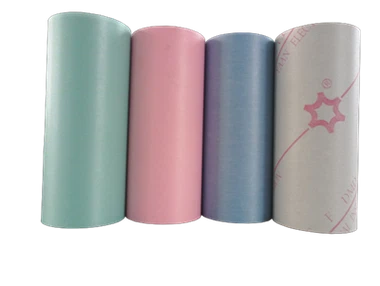
Precautions for using insulation materials in motors
Oct 31, 2023
Motors have electrical performance requirements for insulating materials, with breakdown electric field strength and insulation resistance being the most important. Depending on the type of motor, the requirements for other electrical performance are not exactly the same. For example, the insulation of high-voltage motors requires that the dielectric loss of the insulation material should be small and the corona resistance should be good; and the electric field distribution between the core and the conductor must be considered. Insulating materials should also consider electrical properties such as corona resistance, arc resistance, and resistance to leakage traces. Insulating materials can be divided into organic materials and inorganic materials according to their chemical composition. Organic insulation materials are the most widely used; inorganic insulation materials, such as mica, glass, asbestos, etc., are generally used in conjunction with organic insulation materials to overcome the weaknesses in their mechanical properties.
Various insulation materials are uniformly numbered, such as 1032, 2432, 3280, etc. The meaning of the four digits is as follows:
The first digit indicates the classification of the insulation material. 1 - Indicates insulating paint, resin and glue; 2 - Indicates insulating impregnated fibers; 3 - Indicates insulating laminated products; 4 - Indicates insulating pressed plastics; 5 - Indicates insulating mica products. The second digit indicates different varieties of the same material. For example, in the first category of materials, 0 and 1 represent impregnation paint; 2 represents covering paint. For another example, in the second category of materials, 0, 1, and 2 represent cotton fiber varnish; 4, 5 represent glass fiber varnish; 6 represents semiconductor varnish and adhesive tape; 7 represents paint tube; 8 represents film; and 9 represents film products. The third digit indicates the insulation and heat resistance rating of the material. Grade A; Grade E; Grade B; Grade F; Grade H; Grade C. The last digit indicates the material serial number to indicate the differences in formula, composition and performance of similar insulation materials.
When the motor is running, it inevitably generates heat due to losses, so the insulating material used must have good heat resistance. The heat resistance of the insulating material directly determines the allowable temperature rise of the motor. Insulating materials are divided into seven levels according to their heat resistance. Each heat resistance level corresponds to a certain limited use temperature. Below this temperature, the insulation material can be used for a long time without affecting its performance. In addition, the insulating material should also have good thermal conductivity and large heat capacity. Large motor coils also often hope that the linear expansion coefficient of the insulating material can be close to that of the conductive material to avoid insulation breakage during thermal expansion and contraction. During the wrapping, forming and bulk packaging processes of the windings, as well as when the motor is running, the insulation will be subjected to various mechanical stresses. Therefore, corresponding mechanical performance requirements are put forward for the insulating materials, such as tensile strength, compression strength, bending strength, and resistance to bending. Shear, impact strength, etc. If the mechanical properties of the insulating material are poor, the electrical properties can easily be significantly reduced due to the influence of mechanical forces. There are also other requirements for insulating materials, such as low hygroscopicity; good resistance to acids, alkalis, and oils; no acidic or other easily ionizable substances; and easy processing.
Insulation materials: Choose different materials according to insulation level
Grade B: Enameled wire (130 polyester enameled copper round wire), insulating paper (6020 polyester film, 6630 polyester film, polyester fiber non-woven soft composite material), slot wedge (bamboo slot wedge), casing (acrylic ester fiberglass hose), lead wire (JY cross-linked polyolefin lead wire), tie (PST polyester short fiber non-woven tape), insulating paint (common to Class B and F). Grade F: Enameled wire (155 modified polyester enameled copper round wire, 180 polyester imide enameled copper round wire), insulating paper (6640, 6641 polyester film polyaramide fiber paper soft composite material), slot wedge ( 3940 epoxy fiberglass lead-out wedge, 3240 epoxy glass cloth laminate), casing (silicone rubber fiberglass hose), lead wire (JYJ cross-linked polyolefin lead wire, silicone rubber insulated motor lead wire), tie Belt (PST polyester short fiber non-woven belt), insulating paint (common to Class B and F).

Insulation impregnation means that during or after the manufacturing process of the motor and after the motor stator winding or rotor winding is assembled with embedded wires, the motor is impregnated with insulating paint according to a certain process method to improve the heat resistance, moisture resistance, chemical corrosion resistance of the insulation, and improve Various electrical properties of motor insulation, reduce dielectric loss, improve the mechanical properties of insulation, improve thermal conductivity, reduce motor temperature rise, extend motor insulation life, and extend motor service life. Insulation impregnation is a key process in motor manufacturing. Commonly used impregnation methods: a. Ordinary immersion; b. Continuous immersion; c. Roller immersion; d. Pouring paint; e. Dripping paint; f. Vacuum immersion paint; g. VPI vacuum pressure immersion paint.