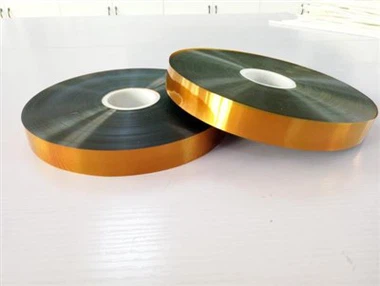
3 points of polyester film classification
Dec 31, 2024
PET film is also called polyester film. It is one of the most widely used plastic films in the world. It is available in a variety of types to meet different application requirements. Here we will describe the classification of different types of polyester films.
Polyester film
Polyester film (PET) is made of polyethylene terephthalate as raw material, extruded into thick sheets, and then biaxially stretched into film materials.
Polyester (BOPET) film, milky white film and other printed packaging films are widely used in glass steel industry, building materials industry, printing industry, medicine and health, etc. Polyester film is expensive, with a thickness of generally 0.012mm. It is often used as the outer layer material of steaming packaging and has good printing suitability.
Features of polyester film
Polyester film is usually a colorless, transparent, and glossy film (additive particles can now be added to make it colorful). Excellent mechanical properties. High rigidity. Good hardness and toughness. Puncture resistance. Friction resistance. High and low temperature resistance. Chemical resistance. Oil resistance. Good air tightness and fragrance retention.

It is one of the commonly used barrier composite film substrates, but its corona resistance is poor.
According to the raw materials and stretching process, polyester films can be classified into the following two categories.
1. Biaxially oriented polyester film (referred to as BOPET).
It is a high-end film made of lightweight materials (that is, titanium dioxide is added to the raw polyester chips. It is dried, melted, extruded, cast, and longitudinally stretched. It has a wide range of uses.
2. Uniaxially oriented polyester film (referred to as CPET).
It is a film made of semi-matte materials (raw polyester chips, no titanium dioxide added) through drying, melting, extrusion, casting, and longitudinal stretching. It is the lowest grade and lowest price among polyester films. It is mainly used for pharmaceutical tablet packaging. Due to the small amount of use, the possibility of large-scale production by manufacturers is small, accounting for about 5% of the polyester film field. The standard thickness is 150μm.
Classification by use
Due to the characteristics of polyester film, its uses are different. Polyester films for different uses have different requirements for raw materials and additives, different processing techniques, different thicknesses and technical specifications. Only BOPET has more uses, so the films classified by use are all BOPET, which can be divided into the following categories:
1. Electrical insulation film.
Due to its good electrical, mechanical, thermal and chemical inertness, good insulation performance, high breakdown voltage resistance, it is specially used for electronic and electrical insulation materials.
2. Capacitor film.
It has high tensile strength, high dielectric constant, low loss factor, good thickness uniformity, It has excellent electrical properties and high resistivity, and is used as capacitor dielectric and insulating compartment.
3. Card protective film.
It has good transparency. High stiffness. Good thermal stability. Excellent winding performance and smooth surface. Uniform longitudinal and transverse tensile performance. It also has excellent properties such as waterproof, oil-proof and chemical-proof. It is specially used for packaging protection of pictures, documents, paper and office supplies. As a protective film, it is flat and beautiful after hot stamping. It can keep the original clear and not deformed.
4. General film.
It has excellent strength and dimensional stability. Good cold resistance and chemical stability. It is widely used in composite packaging, photosensitive film, metal evaporation, audio and video Recording and other substrates.
Polyester film classification by quality
Different manufacturers have different grading of polyester film according to its quality, generally divided into A-grade, B-grade and C-grade products.
Generally, A-grade products account for 97-98% of the products sold by manufacturers, and B-grade products account for only 2-3%, and the circulation volume is not large. The main reason is that the price of raw materials is high, and manufacturers generally recycle them as raw materials, or sell them to textile mills as short fibers for textile raw materials. Manufacturers sometimes sell quarterly or half-year inventory films as B-grade products.
This practice is a consistent practice of some manufacturers in Southeast Asian countries, with the purpose of reducing inventory.